

How to Choose Conductor Materials for Harnesses? A Comparison of Conductivity and Cost Among Copper, Aluminum, and Alloys
1. Copper Conductor Material
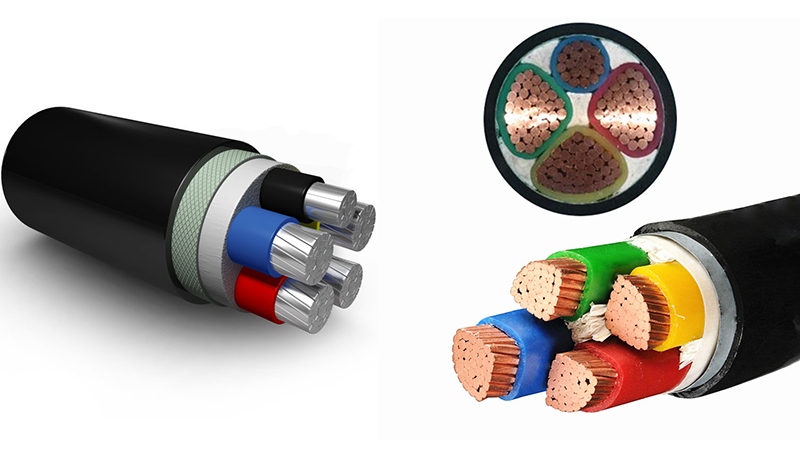
Copper is renowned as the "king of conductivity" due to its high electrical conductivity, excellent ductility, and corrosion resistance. In energy storage harnesses and automotive low-voltage harnesses, copper conductors are highly favored for their stable current transmission capabilities. Particularly in high-voltage harnesses for electric vehicles, annealed pure copper serves as the conductor material, meeting the demanding requirements for power loading, control, and application. However, copper is relatively expensive and heavier, which increases the cost of large-scale applications to some extent.
2. Aluminum Conductor Material
Compared to copper, aluminum conductors offer the advantages of being lightweight and lower in cost. In today's pursuit of lightweighting and cost reduction, aluminum conductors are widely used in industries such as automotive and aerospace. However, it is important to note that aluminum's conductivity is slightly inferior to copper. To compensate for this, the cross-sectional area of the wire often needs to be increased. Additionally, aluminum's oxide film can affect connection stability, so special treatments during processing are required to improve reliability. Despite these challenges, aluminum conductors still hold a place in the market due to their cost advantages.
3. Alloy Conductor Material
Alloy conductor materials, such as copper alloys and aluminum alloys, combine the advantages of multiple metals, offering unique properties. Copper alloy wires, made by mixing copper with other metals (e.g., aluminum, tin, or nickel), can reduce costs to some extent while maintaining good conductivity. Although aluminum alloy cables excel in certain aspects, they still face challenges in practical applications, such as complex joint processes and a lack of unified standards for current-carrying capacity. Therefore, when selecting alloy conductor materials, it is essential to comprehensively consider factors such as conductivity, heat resistance, oil resistance, and cost.
4. Comprehensive Considerations
At Kable-X, we always prioritize our customers, providing customized harness solutions based on their specific needs. When selecting conductor materials, we take into account multiple factors, including conductivity, cost, weight, corrosion resistance, and processing difficulty. For applications demanding high performance and reliability, we recommend copper conductors. For scenarios prioritizing lightweighting and cost reduction, aluminum conductors are a great choice. And for situations requiring a balance of multiple factors, alloy conductors may serve as a suitable compromise.
Exploring IP Waterproof Ratings: Safeguarding the Safety of Electronic Products
From color to numbering, how much do you know about automotive wiring harnesses?
Related Article

Singapore. Suzhou serves as R&D and smart‑manufacturing base, Mexican plant serves American markets, and Singapore
subsidiary integrates global resources. Covering new energy, industrial control and automotive harnesses, we deliver
high‑performance customized interconnection solutions with reliable quality and localized production for worldwide clients.

resistance and lightweight performance. Compliant with EN45545-2 and RoHS standards, they serve new energy vehicles, rail
transit and smart home appliances. With strict quality control and customization, we deliver high-safety green connection solutions.

experience, Kable-X provides high-precision custom touchscreen harness solutions. We conduct shielding and cable design for smart home,
automotive, industrial HMI and other scenarios. All products pass multiple reliability tests. Rapid sampling is available to deliver stable
signal connections for various smart terminals.

professional EMC simulation, sophisticated manufacturing and full-standard testing, our products deliver excellent impedance matching
and shielding performance. Supporting rapid prototyping and mass production, we offer stable and efficient transmission solutions for
high-frequency devices.